Friday, September 23, 2016

Land Of Seven Rivers by Sanjeev Sanyal

Rating -3/5Copy - Amazon Kindle 

16115622

Sanjeev Sanyal, in a highly readable book that gently takes you through the twists & turns of India’s history from the standpoint of her geographical nature – rivers, mountains, flora & fauna. This book immerses the reader as the book keeps up the constant engagement & does not over-burden the reader with historical facts & meandering stories. Along the way, we pass thought the familiar places & clans that serve as cornerstone to Indian history– the Harappa, the Aravalli ridges, the Mughals, the Guptas the British & their mapmakers. A noteworthy departure from the flow is the passage on the genetic testing which has led to linkages between Europeans and North Indians. 

The book is more on the impressionist survey of India’s geography & how the geography shaped India’s history. The passage on Age of Lions & its connection through decades is a revelation. However, the author meanders away from the Geography & steps into the episodes of power struggle in empires. The book also makes little attempt to cover the agriculture evolution, the relationship between the Indians & their environment. 

Often we come across the passage that offers grandiose but fails to go a step deeper:“The brand new city of Gurgaon, is constructed right next to the Aravalli ridges, the oldest discernible geographical feature. If you look north from one of the city’s tall office blocks, you will see the Qutub Minar, built by a Turkish slave-general to commemorate the conquest of Delhi.” 

From the time the first humans enter India from the Persian Gulf to the culmination of the rise of modern India, the author deftly takes you through the long sweeping history of India. What is lacked in the analysis & insights is made up with an impressive flow of the book. 

Sunday, September 11, 2016

Night by Elie Wiesel

1617


Rating - 5/5

Copy - Personal Paperback
“I Have lost faith in everyone except Hitler. He alone has kept promises, all his promises, to the Jewish people.”

One of the many instances the reader will come across while reading Elie Wisel’s autobiographical account – instances that sends chill to your bone. The NYT rightly reviews the book when it says - a slim volume of terrifying powers. While reviewing this book, it is difficult not to be emotional . Each word denotes a singular breath of the author. The experiences are described in the most simplest words but carry the most powerful experiences.

“Night” is an unsettling account of daily life in the concentration camp – the never ending hunger, the sadist doctor who pulls out the gold crown from his tooth, the account of his father getting beaten up to the inch of his life. The experience that jumps out of the book is the honesty in which the author faces his guilt. The guilt of not shedding a tear seeing his father beaten up, the guilty relief at his father’s death. 

“Night” raises profound questions about God and existence. The events of Holocaust is decades behind us. In the preface Wiesel explains why he wanted to write this account – “duty to bear witness for the dead & living” He probably exceeded his duty in keeping the tragic memory of inedible dark mark on humanity alive. 

Imperium: A Novel of Ancient Rome (Cicero #1) by Robert Harris


243601

Ratings - 4/5
Copy - Amazon Kindle 

If I were to describe this book by Robert Harris in the most simplest terms , a book filled with Latin jargon & Roman innuendo, it will be the "House of Cards starring the revered intellects of Ancient Rome". The events are told from the standpoint of Tiro - the events, the outcomes of those events, the characters in those events are colourfully addressed by Tiro. Tiro is the confidential secretary & something he never forgets to remind the reader, a slave of Cicero.

Apart from the breathtaking political manoeuvring by Cicero, easily the most exciting part of the novel is when the Julius Ceaser makes his maiden appearance coupled with Tiro's off-the-cuff description of him.The book chronicles the journey of young Cicero from the time he sets off to master oratory taught by Demosthenes to the time when he wins the Roman counsel-ship. The book is littered with characters who makes an impression on the reader- from Pompey the Great to Cicero's great rival - Qunitus Hortensius. The book or rather Tiro, does not hold back to describe Cicero's personal relationship with his wife or his younger brother. Cicero stumbles throughout the book, from one seemingly tangled knot to the another. The author ensures that the book does not miss a beat as he neatly weaves one aspect of the story to another. The book is peppered with quotes that still finds relevance today. Sample this: 

" Power brings a man many luxuries, but a clean pair of hands is seldom among them" 

" Words words words. Is there no end to tricks you can make them perform? " 

" No one can really claim to know politics properly until he has stayed up all night, writing a speech & delivering the following day. While the world sleeps, the orator paces around by lamplight..."

"Content does not matter to me. Only three things count in oratory - delivery, delivery & delivery" 

What makes the book more exciting is that the events (rather politics) has taken place in reality - the author ends the book with the caveat " the majority of the event dud actually happen ; the remainder at least could have happened". The book ends on a high making you want to read "House of the Card starring Cicero Season 2"

Dealing with China: An Insider Unmasks the New Economic Superpower by Henry Paulson

“It was then and it remains to a greater extent today that China is governed by men and not by laws” – one of the many no-holds-barred statement by Hank Paulson in his memoir of China. Hank Paulson had an unprecedented access to the top leadership of Communist Party of China (CPC); an access that caused an envy even among the Government Officials in China. The book divided into 3 parts – 1/3 on his experiences from putting a foot of his firm in China to his firm getting synonymous in any deal related to China; 1/3 on his experiences as a Treasury Secretary and the Strategic Economic Dialogue (SED); 1/3 on general commentary which revolves around the Political Leadership and the Way Forward for China.

As the head of Goldman Sachs and then as the Treasury Secretary during the Bush administration, Hank Paulson seamlessly switches track from “doing specific deals “to “Policy specifics” in the course of the book. The book is peppered with instances related to the culture and mannerism of the Chinese officials. Paulson is credited to opening the doors of China to private enterprises and he takes us through the deals of IPO’s and strategic investments his firm had conducted during his tenure. He manages to give a reader a top-level view on how China has pivoted from a trade-outsider to a backbone of world economy. The fight for economic reforms, bank loans & corruption cleansing are well documented. I got a sense of Déjà vu while reading about bank loans gone rotten; a fight that the incumbent RBI Governor is undertaking for Indian Banks.

15826600

A nice side-track is Paulson’s involvement in developing a Management course in Tsinghua university. Upon the request of then Premier – Zhu Rongji, Paulson used the expertise of deans in HBS and INSEAD, and host of leaders in Global Enterprises to make an executive course . In typical Pauslon style, he points to the Cultural Revolution during Mao’s regime that prevented a generation of men & women who lost their education during university shutdown. 

Paulson takes the sensitive issues head on - freedom of press, censoring of internet, censoring of dissent, pollution & environmental concerns. The book gives you a balanced view point of China but after finishing the book , I felt underwhelmed . The top view approach remains a top-view. The author does not really dissect the issues to deep-down level. If the author had written the views of his junior colleagues who would have dealt with the Chinese Officials at a different level, the actual workings of China would have been in display. 

Friday, December 25, 2015

Elon Musk by Ashlee Vance

Near to the end of the book, Peter Thiel remark on Elon Musk summarizes Elon’s contribution to the world. He said – “Elon has gone so far as to give people hope and renewed their faith on what technology can do to their lives”. Musk, in more ways than one, is one of the makers of modern America, and the author Ashlee Vance does justice to this point with a free-flowing account of his exploits in making Tesla and SpaceX as a typical Silicon Valley Company – exciting, ambitious and far-fetching in its goals. Probably Elon Musk’s greatest contribution is bringing manufacturing back to America – SpaceX’s rockets are made mostly in America, and with the jumpstart of Gigafactory in Nevada – it does justice to this point. 

The book runs deep in Elon’s exploit of SpaceX and Tesla and with Paypal story playing a distant second fiddle. The author does well in keeping the reader engaged; he peppers the account with Musk’s remark on various issues. The reckless attitude to keep Tesla alive in the middle of the Financial Crisis well documented and it shows what Elon was willing to do to keep his vision alive. Like Steve Jobs, Elon Musk has shattered the cosy club of monopolies in big industries by introducing game changing products. The last successful American automobile company before Tesla was Chrysler – in 1928. By introducing electric cars, Musk is shaking every vertical of the automotive industry. Tesla’s success is a frightening prospect to the car industry – it turns the service of a car on its head. Tesla is rewriting the rules of the game and all the car industry is following it. The same can be said about SpaceX. 


Somewhere as a reader you get the feeling that the author is idolatry in his approach. “SpaceX is Elon Musk” moots this point. One of his other ventures – Solarcity doesn’t find the space in the book to a good extent. By far the golden account is the birth and the struggle of SpaceX which brings the reader a lot closer to Elon Musk - the book is unputtdownable. 

Tuesday, June 2, 2015

An Astronaut's Guide to Life on Earth - Chris Hadfield


An Astronaut's Guide to Life on Earth by Chris Hadfield


"Early Success is a terrible teacher. You are essentially rewarded for a lack of preparation.So when you find yourself in a situation where you must prepare, you don't know how to" 

Sweat over the small stuff - this is the underlying theme of Chris Hadfield's biography (not explicitly mentioned) as he chronicles his major life of NASA days and small portion to his pre-NASA days. There are some gems along the way where the author speaks about "Destructiveness of Competitiveness" ,"Aim to be a Zero" and "Climbing down the ladder". The anecdotes are weaved in seamlessly and the usage of jargon is at a minimal. The passion and the childish enthusiasm bounces off you during the key moments in his life - the first day he reported @ NASA, the lift-off to space, the first few days @ ISS et al or whenever he talks about Human Space mission. 


The portion of the book from the time of lift-off from Baikonur,Russia in Spacecraft Soyuz, his subsequent stay of 5 months in ISS, and the touchdown in Kazakhstan is so vividly written that it is hard to put down the book. During his stay, the social media was coming off age and the author posted some stunning pictures from the space, and "mundane activities" of Astronaut keeping up with earthly behaviours. 

The initial portion of the book is on a lacklustre side, may be because of the absence of "happening" events in Astronaut's life. Part of the reason may be because of long sentences that tends to drift off the readers - otherwise the book by Chris H. rivals in many ways the book by Randy Pausch - The Last Lecture.

Monday, June 1, 2015

It is not about the Trophy, Stupid!

“The applause will die down, the trophy will gather dust, and the experience will fade away. What will remain with you forever is what you learnt out of it.”

It was a day before the Area Level Contest for International Speech 2015. I was in my mentor’s house, horsing around but duly ensured that my mind was under a pretext that I was present in his house to practice my speech.
At one point, I became silent. Sensing something amiss, my mentor asked me what happened. I said : “ I really want to win the Area Level Contest”.  The desire stemmed from the loss at Area Level Humorous Contest 2013.  Not winning the contest is one thing, but not making it to even top 3 was a disaster. Truth be told, I do not like losing.  In my formative years of childhood till adulthood, I was too much into sports – probably I get this attitude from those experiences.  I wanted to make a mark this time.  I now realize how wrong I was in my approach.

I was asked by the editor of this newsletter to write about the experience in participating in the contest. But experience doesn’t amount to much if you do not reflect on the learnings you derived out of the experience.  I thought it was best to share my learnings out of contesting in this year’s contest:

#Learning 1 – Play with your strength.
 This seems a very innocuous message to all of us. DTM Lalitha Giridhar told me this after my disastrous CC6 (and also my first speech in CTM) where I forgot my lines. With respect to all the different technicalities of a speech, there is always a quality (or more) that I believe we are gifted with- either it is body language, confidence, voice modulation, scripts; there is always something that will stand out, that comes natural to you.  How do you discover it ? Simply go through you CC’s and you will find it. I found mine in CC6. Remember to harness that quality to the fullest extent and you will go places.   

#Learning 2 – Learn to unlearn
I am a very wrong person to preach you about this but the inability to unlearn was probably the one of the reasons I did not go further.   I had shared my script with Noorain Nadim for review; and the grammar Nazi that she is, she pointed out a few ( I am being generous to myself)  grammatical errors. The speech was so ingrained in me, that I just couldn’t incorporate those incremental improvements. To go further, we should be at peace in incorporating significant changes in the script as we go along in the contest. I couldn’t get myself to incorporate minor ones.

#Learning 3 – Follow your message

Follow your dreams now because it comes with an expiry date – this was my message in the script. The first time I sat in front of my computer I didn’t intend to revolve my script around this message but this eventually came out. I recollect on how many dreams, wishes and desires I delayed because of some naïve reason. Some have died – for example Aishwarya is now dating someone else; some has still life in it. This is the biggest learning I got – I now embrace my message. 

Friday, January 2, 2015

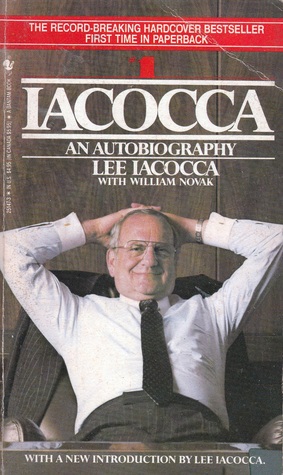
Iacocca: An Autobiography


Lee Iacocca's autobiography is an appealing read if you belong to the automotive industry. The insiders view of the two of the big three automotive giants - Ford and Chrysler, is enough reason to pick up the book. 
The book has some amazing management nuggets on how to lead a productive ans a healthy work-life. The two golden nuggets I took away from the book was: 

1. In the end, all business operations can be reduced to three words: people, product, and profits.
2. Divide and track your own professional goals in quarters as your company does. 

From a superficial level, the book is neatly divided into two segment: 

1. Journey at Ford 
2. Embattle Journey at Chrysler 
486319

But then the golden goose lies in the last segment of his book - "The Straight Talk". The article on the Japanese challenge is an engaging read which poses a comprehending argument on 'Fair vs Free Trade". 
What the book fails in delivering is the following: 

1. The family of the protagonist makes only a fleeting presence throughout the book. One of the Lee Iacoccoa's quote says" The only rock, the only institution that stays is your family". The book falls short on revealing the personal side of Lee Iacocca.

2. The portrayal Henry Ford's eccentric behavior has an amazing parallel to a Bollywood antagonist. The little scoops of Henry Ford II keeps the "masala" factor on. But the criticism on HF2 doesn't seem entirely fair. HF2 recruited a band of young guns who were dubbed as "Whiz Kids". Currently Ford is regarded as one of the best Financial Institutions and it is because of the practices laid by one of the Whiz Kids. This is just one of the instance. 

3. The books looks preachy at lengths for several times. The protagonist cannot do any wrong and is the Superman of the book. Maybe that's why an autobio is written. But Steve Jobs was very forthcoming about this negativities  in his book. 

All in all the book is a fair and a straight talk from Lee Iacocca - he said it as he saw it. There are plenty of anecdotes in the book, This one takes the cake - at the height of the Mustang frenzy, Lee was flying transatlantic to Europe when two pilots of jets flying nearby and a Captain from a Ship in "radio wave vicinity" patched in to talk to Lee when they figured out he was in the plane!  

2014- The Election that Changed India by Rajdeep Sardesai


Rajdeep, one of the most trustworthy and professional journalist in India (please don't judge him from the vicious twitter attacks!), book on the 2014 election is not really a discourse on the Election but rather an omnibus of the 6 month account and what preceded it.

Why the book is titled "The Election that Changed India" is not clear in the book. The Election results defined India's expectations and the simmering anger against Congress was put to forth. May be the title would have more apt few years from now when actual change (positive side, hopefully!) is visible on the ground.

23488171

Any concerned and informed citizen would be well aware of the storyline and the prime characters, but what makes this book an very engaging read is the personal anecdotes of the author with the various colourful political characters across parties peppered right across the book. The account on what preceded the "Self Destruct" interview of Rahul Gandhi's interview with Times Now; and the author's incident relative to the "Cash for Votes" are some of the best pieces in the book. The section on the use of IT in Modi's Campaign is where the book meanders a lot - probably the absence of politicans in this front and virtually no resistance from Congress in this field lead to a bit of a drag.

The author really tries to just put the facts (incidents in this case) on the table and leave the judgement to the imagination of the readers, but fails to do so on some accounts. The photo-op of Amit Shah releasing the book was an endorsement that the accounts described in the book are true. 

Friday, September 26, 2014

God is a Gamer - Ravi Subramanian

Ravi Subramanian has an innate ability to stitch a wonderful plot using the current happenings in the financial sector. Though i have read only a few books of his, I am quite surprised by the speed at which he releases the books. 

While I was reading the book, I remembered the screenplay of the popular (still!) sitcom- FRIENDS. There always would be two stories running parallel to each other in the same show, that keeps the audience engaging. The same thought process was employed by the author when he took us through the events in Washington and Mumbai. The chapters are divided into small pieces and the flow is also quite smooth. 

The author failed to engage me in the second part of the book where the plot seemed hazy. Where the author largely fails is the portrayal of side characters. The death of a popular character, which found space in all the books i have read, was given a shabby treatment. 

The climax of the book, which is revealed inside a CBI office was more akin to a cross over of melodramatic movie of yesteryears against the backdrop of CID. A decent read if you are looking to pass time for 2-3 hours, otherwise it is a let down.

Sunday, June 29, 2014

Ford Vs GM - Contrasting Fortunes

The news feeds coming out of Detroit - an aging and soon to be erstwhile capital of Automobiles, encapsulate the extremes. The top two auto companies, General Motors and Ford Motor Company are hogging the bandwidth of automobile news for different reasons. Ford, which will soon undergo a leadership change, is making all the right noises for nearly half a decade now. General Motors, in contrast, is being embroiled in one controversy to another.

It was during the Great Depression, that General Motors took the number uno position from Ford. It is ironic that, it took another depression-like state of the economy for reversal of fortunes. Though GM still holds an upper hand in terms of volume as compared to Ford; as we roll into the twilight of this decade, that landscape is poised for a change.  

Nearly a decade ago, both the companies, and largely the whole of auto industry, were at cross roads. The economy, at that time, was booming; but one could feel the stress it was put into. Everyone knew that the bubble was about to explode, but everyone was having too much fun to care! 


What got Ford into the drivers seat, was the decision they got in 2006 when they appointed an "outsider" in Alan Mulally. Mulally drove home a simple plan of "One Ford", unifying Ford's global market under the Blue Oval. A wise man once said - " For success, you need to spend 5% percent of time in strategizing  and 95% of time in execution". Mulally, it seems, was communicating the same. From the decision to forgo the Federal money and to sell off or minimize the holdings in non-Ford brands, Mulally's plan began fructifying since early part of the decade The bourse in New York, goes on a cheer when the ticker reads symbol "F". With a market cap of now $161B and $7B in profits, Ford has regained its glory days.With a more streamline and globalized vehicle production, Ford is poised to leap further. Dubbed as the savior of the "American Icon", Mulally's name will be whispered in the same breath of that of Steve Jobs. 

In contrast, GM has faced steady headwinds for quite some time now. May be they were slow to recognize the impending and looming crisis, both inside and outside the company. For the past decade, it has seen four leadership change as compared to one at Ford. One leadership change, the ouster of Rick Wagoner was explicitly asked by the Govt of United States which was pumping money at that time to keep the behemoth from a wipe out. The final bill stood at close to USD 12 Billion. Situation was desperate at that time for GM, that  it explored the possibility of merging with the other two of the Big three-on different occasions. Going into the new decade, fortunes hasn't turned around to that level of Ford's. It returned to profits in the early part of the decade; but the expenditure of $12B on GM will be remembered as a dark spot which will take some time to rub off. 

The current trips, outside of Detroit, of the two firms CEO's has parallels to the current state of the firm. Alan Mulally will bid good bye to Ford, is glob trotting for farewells and earning the appreciation and good will of its employees. In contrast, Mary Bara is trotting to Washington to appear before sub-committees and earning their ire over the mishaps of faulty ignition switch. Barra, a lifer herself at GM, has promised to change the "deep underlying cultural problems" at GM - the same that Bill Ford recognized a decade ago at his firm. May be she will take a leaf out of Mually's book or seek his advise. Now that Mulally has time from July 1st, but he will be "slow" to oblige if GM comes calling! 


Outliers By Malcolm Gladwell

Copy - Kindle Rating - 3/5 Around the globe, Malcom Gladwell is known as a foremost thought leader. The gift that the author has, apart ...